Troy Basso Outdoors
"Capturing the outdoor lifestyle"
The future of Archery depends on our children.
 In 35 years of bowhunting the one thing that never ceases to amaze me is that bowhunters are the worst people to help get some “started” in archery. Now once a person knows how to shoot and has the basic archery skill set a bowhunter is always a good resource. By starting I mean someone who has never ever held a bow but has an interest. This might be your spouse, kids, or coworker. There are some things we can all do to assist and mentor new folks into the sport.
Your bow is not the best bow – Ok I am sure this hurts most of us but, it’s a fact your bow will probably not be the best bow for a beginner. It may very well be the best bow for you but your 1000.00 bow, 600.00 worth of sight, quiver, limb savers and stabilizer is yours. It fits you, you can draw it comfortably, and much like a fly rod it’s a very personalized tool. Remember when helping a beginner that they are probably not going to enjoy pulling a 70-pound bow for very long. Make sure you steer them to a bow that fits them, they can pull, and one they actually like. If your daughter like pink camo bows let her have a pick camo bow, we all know pink camo only works on flamingos but being happy is a big part of archery.
Your accessories are yours not theirs – My sons are living proof that my stuff does not work for anyone but me, at least not very well. I shoot a handheld release and my leftie is just not comfortable shooting that. My sight pins are tiny and have a light but my oldest can’t see them, even in daylight, and the light blinds him. We went to the local pro shop and they shot several releases until the found one they liked, same with sights they picked their own.
Your Brand choice might not be theirs– Luckily everyone in my home has a Bear Archery Product that fits them and that the enjoy shooting. When it comes to kids and smaller framed adults the ability to have a large range of draw weight adjustment is paramount. The muscles used to draw a bow change from setting to standing and they are not muscles most people use daily. A new shooter will want to adjust their draw weight as they develop these muscles. The ability to adjust your draw length at home is generally a plus as well. A beginner has no clue to where or how they are going to anchor until they have actually shot the bow so you will, as a rule need to make an adjustment or two in the early stages.
It does not take a 70-pound bow hunt most big game– As a bow hunter education instructor this was a myth we has to dispel very often. If you hand a new shooter a bow that’s too heavy there are a couple thing that WILL happen.
- They will struggle to draw the bow and it will cease to be interesting very fast.
- They will develop very bad habits to try to compensate for the excessive weight.
Remember an accurate shooter with a 45-55 pound bow is always more lethal than a shooter with a 70-pound bow they hate to draw.
Work is never fun– If you make shooting to much like work through improper equipment and excessive draw weight it won’t be fun. If archery is not fun then a new potential archer won’t grow into a bowhunter. I try to stay away from 3D targets in the beginning. Large colorful bag targets, for kids ones with dart boards and games, are perfect visual aids. I say large targets because a beginner does not want to spend ½ the time trying to dig arrows out of the grass.
Range is key – Yes I can in fact shoot out past 50 yards all day long with my Bear Archery Domain. My kids not only can’t but they should not be attempting those shots in the beginning. Start at 10 and move new archers out to realistic hunting ranges. Once a new shooter can hit what they aim at a 3D range is the next step.
Never forget than an archer is not a bowhunter. A beginner has to learn, and like, archery before they can morph into a bow hunter. Some people, like my daughter will probably never take that step but she enjoys archery and the family fun that can be had with sticks and strings.
Making Sense of Hunting Optics

In today’s world of high tech optics the myriad of choices presented to the consumer are endless. Hopefully this article can make things a bit “clearer”, pardon the pun, for the average hunter.
Rifle Scopes
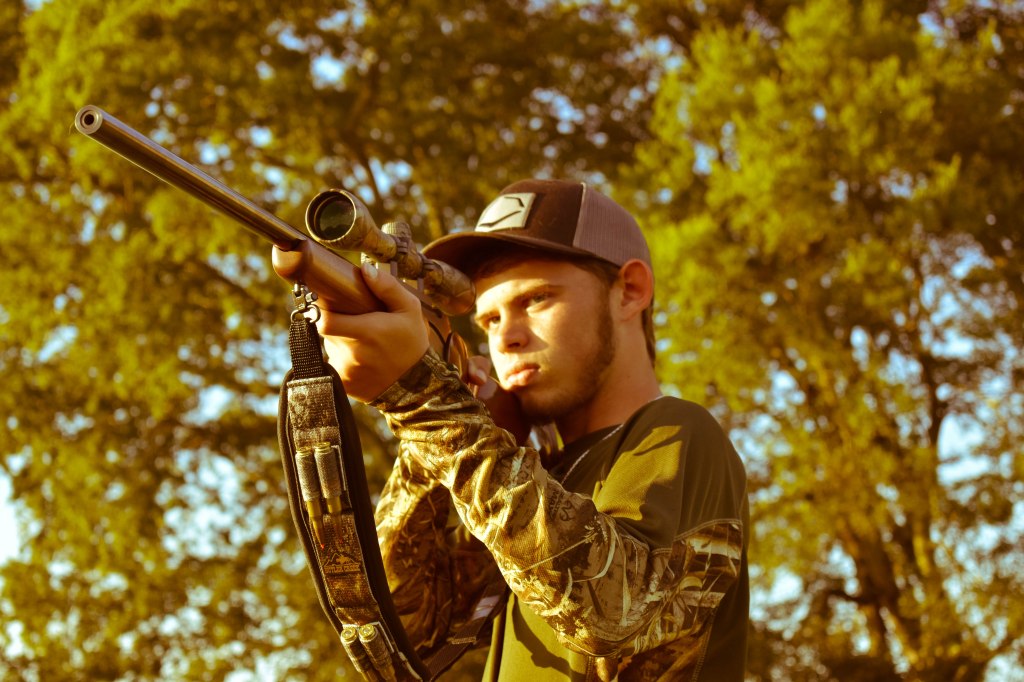
A good quality scope has been the key to many successful hunts yet most hunters don’t know where quality ends and “fluff” begins. The scope’s job is to bring distant targets in close to facilitate a clean shot. The power of the scope matters not if the image is not clear to the shooter’s eye. Selecting the right scope to fit your individual needs is the key to having that great hunting set up versus just any set up. Things that need to be considered are image quality, construction, and magnification.
Image Quality
In order for a scope to provide the shooter with the best possible image, it must deliver as much light to the shooter’s eye as possible. The more light, the better the sight picture will be. In scopes the second number is the objective lens size. An 8X32 scope has an objective lens size of 32mm where a 5X40 has a 40mm objective lens size. The larger the lens size the brighter and clearer the image will be. The quality of the glass, coatings and lens design also contributes to the image quality.
Construction
The construction of a scope has a very direct impact on its visual clarity. If a scope is poorly built it will allow moisture to get in the tube and will become all but useless. Generally speaking, a fixed power scope is built to be more resistant to water and moisture than a variable power scope. This is simply because there are fewer moving parts. Better quality scopes are sealed, waterproof and fog proof. Look for nitrogen filled scopes as they are a better quality than those that are not.
Magnification
Two numbers separated by an “X” like 4X32 generally refer to scopes. The four represents the magnification level. This means the object is four times closer than when viewed with the naked eye. There are basically three types of magnification. Low powers (1.5-6X32 or 2-7X32) are best suited for close range and moving targets. Medium powers (3-9X40 or 4-10X40) are best for big game hunting when ranges will be moderate. The high power (6-18’s and such) are designed and best suited for long range shooting at still targets. Remember, when looking at magnification, the bigger the objective lens the better the image will appear in the scope.
Parallax
Parallax is a condition that occurs when the image of the target is not on the reticle plane. This can cause the target to appear to move or be out of focus. Better rifle scopes under 10X or 11X have the parallax pre-set out of the package. The high power models generally have a parallax adjustment of the scope to set it for the individual shooter.
Laser Range Finders
In recent years the laser range finders have become increasingly popular with hunters. A laser range finder delivers a fast pulse of light to the intended target and gives you a very precise readout as to what the distance is. The flight time of the pulse of light is calculated to give the actual distance to the user.
A good laser range finder is also constructed sturdily. It should have a plus or minus one yard tolerance as a minimum. Look for a model with a reticle for precise ranging and don’t forget that these gadgets run on batteries so a low battery indicator just might avoid a botched shot opportunity because they went dead.
If you plan to use your range finder for close ranges make sure you check the spec sheet to insure it will range at the closer distances. Some models won’t give a reading inside a pre-set distance which makes some units useless for a bowhunter yet practical for a gun hunter.
There are several outside factors that can affect a range finder’s ability to function properly. First is the user’s hand stability. If you can’t hold it still you will never get a reading. The weather can hinder performance as well; rain or dense fog can render a range finder useless at times. A target’s reflectivity is also key. You can get a reading off a flat hard surface much better than a moving animal. Last but not least, you will always get a better reading if you can range a target as close to 90 degree’s as possible.
Binoculars
There are basically two types of binoculars available to the modern hunter. They are Roof Prism and Porro Prism. The roof prism is your basic set up. The Porro prism type basically makes depth perception better and offers a better field of view.
Field of View (FOV)
The FOV refers to the distance side to side of the subject being viewed. It is calculated by the width in feet (or meters) visible at 1000 yards. Higher-powered units generally have a smaller field of view and are better suited for looking a stationary object. The lower powers generally have a larger field of view and are better for scanning the landscape or following a moving target.
The Exit Pupil
The exit pupil is the size of the circle of light visible at the eyepiece. A pair of binoculars that are 8X32 have an exit pupil of 4mm (divide the power by the objective lens size). The closer you can get to 5.5 mm the better the image will be, therefore a pair of 10X50 binoculars will provide a better image than the 8X32.
Eye Relief
Eye relief refers to distance you can hold your binoculars from your eye and still use the entire field of view. People who wear glasses should look for the binoculars with longer eye relief.
The best advice you will ever get on the purchase of a new scope is this, buy the best optics you can afford. Your optics are not the place to save a buck or two.
How to prevent frostbite
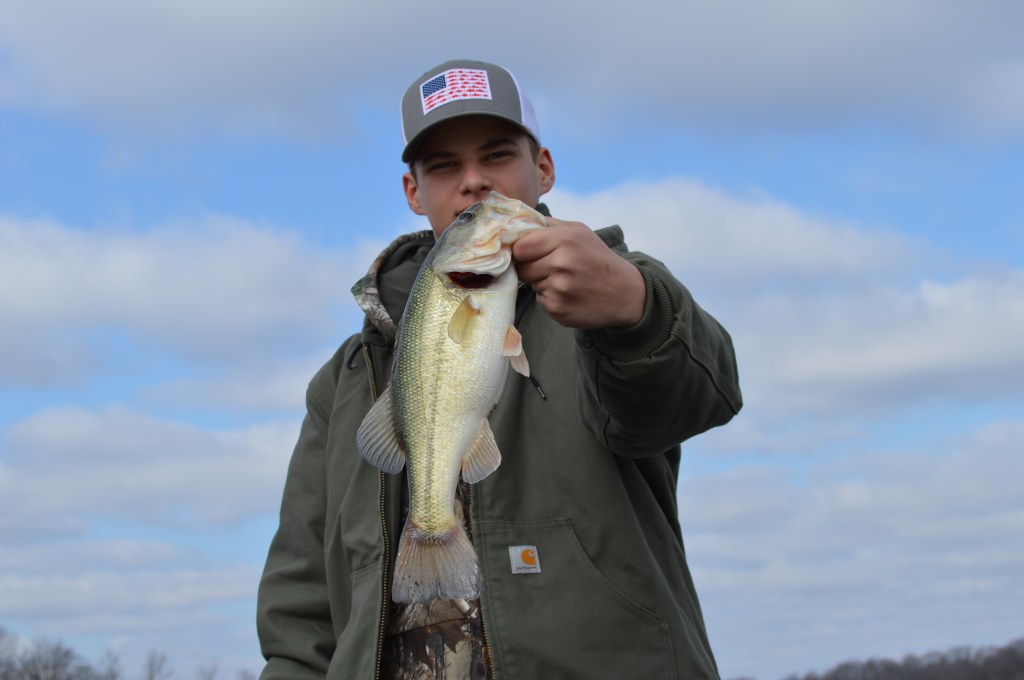
Between hunting and fishing it seems we all manage to pick the nastiest weather to pursue our passions. After all, just because it’s twelve degrees it’s no big deal, especially when it’s your first day off in weeks. A little prior knowledge and preparation can insure many more days afield or on the water.
Frostbite is the condition that happens when the skin tissue or the blood tissues are damaged from the cold. Generally this occurs in temperatures below 32 degrees Fahrenheit. Uncovered parts of the body such as the ears, cheeks, nose, extremities such as the toes and for anglers the fingers are all susceptible to frostbite.
Basically frostbite can be broken down into three levels of severity.
Frost nip– Gives you a ” pins and needles” feeling and the skin turns white and soft. It’s a little painful but no damage will occur if noticed early.
Superficial frostbite– Makes your skin feel numb and possibly waxy. Blisters are also possible. The skin will freeze and ice can form in the tissue. The underlying tissue remains soft.
Deep Frostbite– Affects the blood vessels, muscles and in severe cases the nerve endings. It has the potential to cause permanent damage such as blood clots or possibly gangrene. The affected area becomes completely numb and generally will blister. When a person gets frostbite, prompt treatment is required to avoid potentially losing a limb.
Treatment
- Re-warm the frostbitten area.
- Bring the victim inside or get near a warming fire.
- Warn the damaged area by using warm towels or warm CIRCULATING water, warm not HOT.
- If warm water is not available, cover the area with a warm object. DO NOT use DRY heated objects like a heating pad.
- Do not rub or try to pop any blisters.
- Never hold the frostbitten area close to a fire as the tissue is numb and the victims could easily burn themselves and not know it.
- Drink warm liquids but never alcohol.
- Elevate the frostbitten area.
After warming, a superficial frostbite will turn red and be painful but this is normal. A deep frostbite injury will feel hard or wooden and may turn blue when warmed. As soon as possible get professional medical help.
Prevention
- Wear warm clothing and use gloves, scarves, hats and mittens.
- Stay dry.
- Carry extra clothing in case of unexpected weather changes.
- Use skin moisturizer in exposed skin such as the nose and cheeks.
- Watch for the warning signs of frostbite at all times.
Keep in mind that even when the air temperature is above freezing the wind-chill can cause frostbite also. People who have had a frostbite injury before are especially susceptible to it happening again.
Hypothermia… The Quiet Killer

As anglers and hunters we all tend to be outdoors in some of the worst mother nature has to offer. Of all the bad things that could happen to us, hypothermia is the single most dangerous thing out there. It is the number one killer of outdoor enthusiasts nation wide. This silent killer knows no boundaries, so whether you’re elk hunting in the Rockies or steelhead fishing in the northeast you could be it’s next victim.
What is Hypothermia?
Hypothermia is the condition that happens when your body’s core or inner temperature drops below 96 degrees Fahrenheit. It can happen in ambient air temps as high as 70 degrees but generally happens in the 30 to 50 degree range. Exposure to cold, wet, or windy conditions can accelerate it’s onset. A common misconception is that it has to be freezing before you have to worry about hypothermia. Nothing could be farther from the truth. Hypothermia can be broken down into these two primary levels.
Chronic hypothermia
This happens over a long period of time.
- Results from exposure to wind and wetness combined with exhaustion.
Acute Hypothermia
This happens when you fall into very cold water. When dealing with cold water, life expectancy is reduced, but YOU CAN SURVIVE.
- Keep your clothing on, as it will help to trap your body heat.
- DO NOT EXERCISE.
- Stay still in water and DO NOT splash around. Moving water takes away body heat more rapidly than staying still.
- When waterfowl hunting or angling, always wear a sportsman’s float coat or a floatation device. They help to insulate the body.
- Draw legs into chest and wrap arms around in a self-huddle.

Symptoms
- Skin becomes BLUE/GRAY in color.
- Violent shivering develops, giving way to muscle spasms and even loss of the use of your arms and legs. Shivering, which is initially violent in the body’s effort to correct the problem, diminishes (at 33 degrees core temperature and below). As this process too is overwhelmed, shivering action falters and could cease.
- Confusion and drunken like behavior also indicates a person may be hypothermic.
- Once shivering has stopped, so too does the body’s effort to ameliorate the situation. Consciousness is impaired, and will be lost altogether (30 degrees core temperature) as cold takes over.
- The victim’s body begins to shut down to conserve warmth around the heart, so much so that pulse and respiration rates can drop to almost imperceptible levels. No further active process remains for self-generation of heat and gradually a passive shutdown of vital systems takes place.
Prevention
Attempt to stay warm and dry. Dress in layers so you can add or remove clothing as the situation warrants. Put on your cold weather gear before you’re miserable and always get into your rain gear before you’re soaked. Drink lots of warm liquids. Do not drink alcohol as it gives your brain a false sense of warmth. Most importantly, stop and get warm if you even think you or your partner has hypothermia.
Treatment
Treating hypothermia means getting heat back into your body, thus raising the core temperature. Get dry and warm as fast as you can. If a fire can be built do so immediately. Stay by the fire until help arrives or you know you can reach shelter unassisted. In the event of a fall into the water fast action is required, as this is the most deadly form of this condition. Immediately get the victim to a fire and start getting them warm. Change them into dry clothing. Have them lie still as physical exertion is not a good idea. If a sleeping bag is available have them get into it, then you get in with them. Time is crucial and you must get their core temperature back up as soon as possible. SEEK MEDICAL ATTENTION ASAP!
Enjoying the outdoors should be a fun, memorable experience. In order to keep it fun we all need to be aware of potential hazards and know how to not only prevent but also treat a situation such as hypothermia. The old saying, “an ounce of prevention is worth a pound of cure” must have been written with outdoor enthusiasts in mind.
TWRA on the Job

I am forever hearing people complain about the TWRA not doing much of anything. Well this weekend while fishing Percy Priest I was witness to the local officer checking fishing licenses.
Anyone who has fished Stewart’s Creek knows there is always a plethora of anglers setting on the rocks to the left of the creek channel. We all know the area, its generally covered up in litter…

The officer got out of his boat and checked those anglers. Good Job to the Agency. We cant be quick to criticize unless we are equally quick to praise.
 Troy Basso Outdoors